Showing posts with label china beijing. Show all posts

2008/08/22

China Shopping Guide(Beijing)

Introduction
Beijing is a civilized ancient city with a long history and a developed trade. As early as in the Yuan Dynasty 1 1206-1368), Beijing was a famous commercial city in the world. During the Qing Dynasty, the market in Beijing was brisk. Today shops in Beijing are in a great number, scattered in every corner and goods are sophisticated. Goods on Beijing market are brand, special and new products from various parts of the country.
Today, Beijing has 10 famous shopping streets including the Wangfujing, Dongdanbei, Longfusi, Xidanbei, Qianmen and Xiushui streets, and Liulichang Cultural Street. These streets boast modern malls and boutiques or special articles shops and provide various kinds of services.
The goods tourists to Beijing prefer to buy are unique handicrafts and cultural relics full of Beijing flavor, such as cloisonne, jade ware, bronzes and stone tablets with inscriptions, writing brushes, ink sticks, paper and ink slabs, antiques, paintings, calligraphic works and handicrafts including dough figurines, facial masks and kites unique to Beijing.


Famous Bazaars
New Dong'an Bazaar
New Dong'an Bazaar on Wangfujing Street is the earliest and the most famous one in Beijing, with a floor space of 220,000 square meters. Rebuilt into a joint venture, the market is the first-ranking trade mansion for multi-functions of daily used articles, retail sales, cinema, amusement, food and office. The market occupies an area of 22,000 square meters.
Department Store
Located on the Wangfujing Street, it was built in 1955, occupying a floor space of 16,000 square meters. It deals a great variety of goods and becomes the top shopping destination for tourists from home and abroad.
Ruifuxiang Silk and Cotton Fabrics Shop
The shop was opened in the first year of the reign of the Qing Emperor Tongzhi and has a history of more than 120 years. It has branches in Beijing and Tianjin. The shop handles 10,000 kinds of silk, woolen and cotton textiles.
Yuanlong Embroidery & Silk Fabrics Trading Inc.
This trading company handles the Gu embroidery and silk fabrics.
Arts and Crafts World Mansion
Beijing Arts and Crafts World Mansion is China's largest of its kind. Its business scope: gold and silver jewehy,jade, stone and wood carvings, cloisonne, lacquerware, pottery or porcelain lamps, silk fabrics, wax printings, glassware, bamboo and straw woven articles, writing brush, ink sticks, paper and ink slabs, paintings, calligraphic works and seals.
Friendship Store
The store provides services mainly for foreign visitors. It handles silk fabrics, gold and silver jewelry, jade, carved ivory goods, embroidery and cloisonne. Also it has a cafe room, a flower and pot plant section, a tailor's shop, a clock and watch repair shop and a shipment consigning and collection section for providing such services as packing, shipping, mail orders, customs declaration and appreciating cultural relics.
Beijing Antique City
This city is the largest antique exchange center in Asia and handles more than 1,000 kinds of antiques including paintings, calligraphic works, jewelry and jade goods. It has sponsored regular exhibitions and auctions.
Cultural Relics Shop
It has 11 selling stores including Baoshizhai, Yunguzhai, Yueyatang and Qingyuntang studios. It deals pottery and porcelain from different historical periods, gold and silver jewelry, ancient coins, bamboo, wood and ivory carvings, hard wood furniture, paintings and calligraphic works, rubbings from stone inscriptions and seals. Yueyatang Studio sells ancient arts and crafts.
Rongbaozhai Studio
Rongbaozhai Studio has a history of more than 200 years. It deals paintings, calligraphic works, carvings and seals by famous figures, especially the watercolor block prints. Today it has preserved a dozen of valuable works including a Tianhuang seal and a piece of Tianhuang stone weighing 4,275 grams, the heaviest of its kind in the world.


Shopping Streets
Wangfujing Street
As the most famous shopping center in Beijing, it boasts many reputed shops such as New Dong'an Bazaar, Department Store, Arts and Crafts Mansion, China Photo Studio, Foreign Language Bookstore, Shengxifu Hat Store, Darning Optical Shop, Swiss Watch Repair Center, Green House Store, Quanjude Roast Duck Restaurant and Vegetarian Restaurant.
Dongdan North Street (Silver Street)
The clothing stores on this street include Sanyou Mall, Huabiao Market, Baitu Fashion, Fengda Knitwear Store, Qini Clothing for Pregnant Women. Also it boasts wedding photo studios such as Weiwei Bride, Paris, Venus. The restaurants on the street offer dishes of various styles, including Xingyuelou Restaurant, Hunan Restaurant, Sichuan Restaurant and Inner Mongolia Restaurant.
Xidan North Street
This street has old and new shops. The famous ones include Xidan Shopping Center, Xidan Bazaar, Chung-Yo Department Store, Huanan Mansion, Paris Photo Studio, Weiwei Bride Wedding Dress Photo Studio and Capital Bookstore.
Qianmen Shopping Street
This is an ancient shopping street outside Qianmen Gate. It is sided by shops and restaurants. Especially the Dashilar Tourist and Pedestrian Street has many old shops such as Tongrentang Pharmacy, Neiliansheng Shoe Shop, Ruifuxiang Silk and Cotton Fabrics Shop, Quanyechang, Zhang Yiyuan Tea Store and Majuyuan Hat Store.
Chongwenmenwai Street
It is flanked by some big shops and markets such as Jinlun Mansion and New World malls, Hongqiao and Ciqikou markets selling farm produce and aquatic products, and Heavenly Temple Market selling flowers and pot plants.
Liulichang Cultural Street
It is lined by shops including Rongbaozhai Studio, Cultural Relics Shop, Yanjing Calligraphic Work and Painting Studio, Zhenyun Building for selling jewelry, Yide Building for selling ink sticks and red ink paste used for seals, Four Treasures of the Study for selling writing brushes, Jigu Building for duplicating cultural relics and Cuiwen Building for selling seals.
Longfu Shopping Street
A pedestrian shopping street, the shops in the section to the west of Longfu Trade Building mainly sell clothes and those in the section to the east of Longfu Trade Building are most snack eateries.
Xiushui Street
Xiushui Street is one of the famous clothing markets in Beijing. It attracts domestic and foreign tourists with varied styles, colors and materials as well as a cheap price.
Famous Shops and Stores
Department Store (comprehensive)
255 Wangfujing St.
Tel 65126677
New Dong'an Bazaar
Wangfujing St.
Tel:Tel 65280186
Xidan Bazaar (comprehensive)
120 Xidan N. St.
Tel:66022406
Beijing Book Center
West Chang'an Boulevard
Tel:66078477
Friendship Store (comprehensive)
17 Jianguomenwai Ave.
Tel:65003311
Longfu Trade Building (comprehensive)
95 Longfusi St.
Tel:84016688
Qianmen Trade Mansion (comprehensive)
20 Qianmen E. St.
Tel:65113258
CVIK Shopping Center (high-grade)
22 Jianguomenwai St.
Tel:65124488
Blue Islet Mansion (general)
Dongdaqiao
Tel:65025174
Hongdu Fashion Co.
28 Dongiiaominxiang
Tel:65136644
Beichen Shopping Center (comprehensive)
Asian Game Village
Tel:64993263
Guiyou Bazaar (general)
Yong'anli, Jianguomenwai
Tel:65011177
Henderson Center
18 Jianguomennei Ave.
Tel:65183260
Beijing Tourist Trade City
Zhuanjiaolou, Hepingli
Tel:64216431
Ruifuxiang Silk and Cotton Fabrics Shop
5 Dashilar, Qianmenwai
Tel:63032880
Tongrentang Pharmacy
24 Dashilar, Qianmenwai
Tel:63014883
Yuanlong Embroidery & Silk Fabrics Trading Inc.
15 Yongnei E. St.
Tel:67012854
Arts and Crafts World Mansion
200 Wangfujing St.
Tel:65288866
Rongbaozhai Studio
19 Liulichang W. St.
Tel:63012177
Beijing Antique City
21 E.Third Ring S. Rd.
Tel:67747711
Cultural Relics Shop
64 Liulichang E. St.
Tel:63017433
Zhongqiao Duty Free Shop
Fangihuang Residential Area
Tel:67630618
Jinlun Mansion (comprehensive)
40 Chongwenmen St.
Tel:67013497
Beijing-Lufthansa Friendship Shopping City
52 Liangmaqiao Rd.
Tel:64651188
Neiliansheng Shoe Shop (traditional style)
34 Qianmenwai St.
Tel:63013038
Darning Optical Shop
Wangfujing St.
Tel:65252072
China Crafts Shop (handicrafts)
Badaling Section of the Great Wall
Tel:69121027
Wanquantang Pharmacy
35 Chongwenmenwai Ave.
Tel:67012479
Foreign Language Bookstore
Wangfujing St.
Tel:65126929
Beijing Shinei Duty Free Shop
East Third Ring S. Rd.
Tel:67736081
Hengdeli Clock and Watch Shop (Psi)
271 Wangfujing St.
Tel:65253490
Chongwenmen Vegetable Market
Chongwenmen
Tel: 67003881
Shops in Hotels
Shop in the Great Wall Sheraton HotelIt deals Chinese traditional handicrafts such as cloisonne, gold, silver and jade jewelry, silk clothing and embroidered clothing.
Add: East Third Ring N. Rd.
Tel: (010) 65905566 ext. 2324
Commercial Center of Xiyuan HotelThis center is situated to the east of the hotel lobby and sells necessities to the Chinese and foreign guests who stay with the hotel.
Add: 1 Sanlihe Rd.
Tel: (010) 68313388 est. 10142
Shopping Center of Yanjing HotelThis center deals famous Chinese and foreign cigarettes, wines and drinks and silk fabrics.
Add: 19, Fuxingmenwai St.
Tel: (010) 68536688 ext. 16302
Shop in Jianguo HotelThis shop sells handicrafts, films, postcards and silk fabrics and other goods to the guests of the hotel.
Add: 1/F, Jianguo Hotel, Jianguomenwai Ave.
Tel: (010) 65002233 ext. 2158
Bazaar in New Otani Changfugong HotelIt deals lacquerware, tapestries, carpets, figures made of silk fabrics and other handicrafts and seal-engraving for guests.
Add: 26 Jianguomenwai Ave.
Tel: (010) 65125555 ext. 1167
Shop in Minzu HotelThe shop is situated in the east side of the hotel lobby and deals general merchandise and sells gifts to the guests of the hotel.
Add: 51 Fuxingmennei Ave.
Tel: (010) 66014466 ext. 1829
Shop in Qianmen HotelThe shop is on the both sides of Liyuan Theater and meets shopping demands of the audience coming to enjoy Peking Opera.
Add: 175 Yong'an Rd.
Tcl: (010) 63016688 est. 8853
Shop of Xinqiao HotelThis shop deals mainly Hangzhou reversible embroidery, tapestries, embroidered pieces and ceramics from Jingdezhen.
Add: 2 Dongjiaominxiang
Tel: (010) 65133366 ext. 1116
Mingmenfang of Jinglun HotelOn the first floor of the hotel, this shop deals jewelry, silk fabrics and others.
Add: 3 Jianguomenwai Ave.
Tel: (010) 65002266 ext. 8189
Shopping Center in Beijing HotelThis center is on the first floor of the hotel and deals folk handicrafts, paintings, calligraphic works, jewels and daily necessities.
Add: 33 E. Chang'an Boulevard
Tel: (010) 65137755 ext. 257

China Beijing Shopping,Tour Guide

2008/08/17

Do you know the tourist spots in Beijing?

Tiananmen Square & Forbidden City

Walking beneath the red flags of Tiananmen Square is a quintessential Beijing exerience. It was from the Gate of Heavenly Peace that Mao Zedong pronounced the People’s Republic of Chinain 1949. The Forbidden City has been home to a long line of emperors. The structure, which was built by more than 200,000 workers, is the best preserved and most complete example of imperial architecture in China.


The Great Wall

As a visitor to Beijing, you simply must set aside a day to visit one of the glorious Great Wall sites just outside the capital. In general, the farther you go, the more rugged is the terran. So choose your adventure wisely!


Hutongs & Old Beijing

Beijing has a network of ancient alleyways that are living museums of tne old city. These alleyways, called hutongs, still packed with bustling shops and courtyard houses, are full of life. Laundry is strung out from windows and telephone poles, vegetables and flowers are planted in any available space, and old folks play chess, drink beer or tea, and sit on stools to gossip.


Summer Palace

This garden complex dates back eight centuries, to when the first emperor of the Jin Dynasty built the Gold Mountain Palace on Longevity Hill. Notable sights are the long Corridor(a covered wooden walkway), and the Hall of Benevolent Longevity. At the west end of the lake is the famous Marble Boat that Qing Empress Dowager Cixi built with money intended for the Chinese navy.


Temple of Heaven

The Temple of Heaven is one of the best examples of religious architecture in China. Construction began in the early 15th century on the order of Yongle. The complex took 14 years to complete. It contains three main buildings where the emperor, as the “Son of Heaven,” offered prayers. The sprawling complex is a pleasant place for wandering. Watch locals practicing martial arts, playing traditional instruments, and enjoying ballroom dancing on the grass.


Lama Temple

The sweet smell of incense permeates one of the few functioning Buddhist temple in Beijing. When Emperor Yongzheng took the throne in 1723, his former residence was converted into this Lamaistic temple. At its peak, 1,500 lamas lived here. The Hall of Celestial Kings houses a statue of the Maitreya, and the Wanfu Pavilion has a 23-meter Buddha carved from one piece of sandalwood.


Arts Districts


If you are keen to check out the thriving Chinese contemporary art scene, first explore the bohemian Dashanzi 798 art district’s galleries, boutique shops, cafes and artist studios. Nearby are satellite art communities in Caochangdi and beyond that boast converted warehouse and industrial spaces featuring local and international art exhibitions.


Markets

So much to bargain for, so little time! Beijing’s markets offer a wide variety of goods, from “Maomorabilia” and silk slippers to furniture and laptops. Visit the Dirt Martket at Panjiayuan, wher some 3,000 vendors sell factory knockoffs, antiques, Cultural Revolution memorabilia, and handicrafts. For freshwater pearls, and more knockoffs, try the Silk Alley Market or the Pearl Market. For electronics, immerse yourself in Zhongguancun, aka Beijing’s “Silicon Valley.” For antiques, wander the streets of Dazhalan and Liulichang and browse Curio City or Ai jia Market

China Beijing Tour Guide

Why travel in Beijing, China ?

China is a great country with a history of five thousand years. There are plentiful intensive orient culture as well as many mystery and splendid things for you to explore. Kungfu, acupuncture, Feng Shui, divinatory theoryare all from China. Here in China you will have a deep understanding of the orient culture. An epicure could find tens of thousands kinds of delicious food in China

Beijing is a world-renowned ancient capital, and a famous city of world history and culture as well. Beijing is an ideal place to visit, aswell as to invest, and to do business, to shop, to dine or to be entertained. Beijing is both an ancient and a young city. The city is ancient, because it boasts a 500,000- year history of civilization; as a city, Beijing has a history of more than 3,000 years(the city was first established in 1045 BC), and as a capital (Jin Dynasty, the first dynasty in the Chinese history, made Beijing its capital in AD 1115), it has a history of nearly 900 years. This ancient city of Beijing is a masterpiece of the longest history and the largest scale in the world and also is the crystallization of the capital construction in the history of China. Beijing is a young city in terms of vitality and its importance not only in China but also the world over. The reasons why Beijing attracts and pleases people are not hard to discover. In Beijing you can visit the Great Wall, the Palace Museum (Forbidden City), the Summer Palace and the old Beijing Hutongs.


China Tour Guide

It be safe to travel in Beijing China

Tour in China is very safe, especially in Beijing . Each year several million of visitors from all around the world visit China and China still is one of the safer travel destinations of the world. The Chinese welcome foreign visitors. You will find the people warm and friendly.

2008/08/11

Tour Guide - Beijing China


China Tour Guide - China is the largest country in East Asia with Beijing as its capital city. In this video clip learn all about China.

2008/08/04

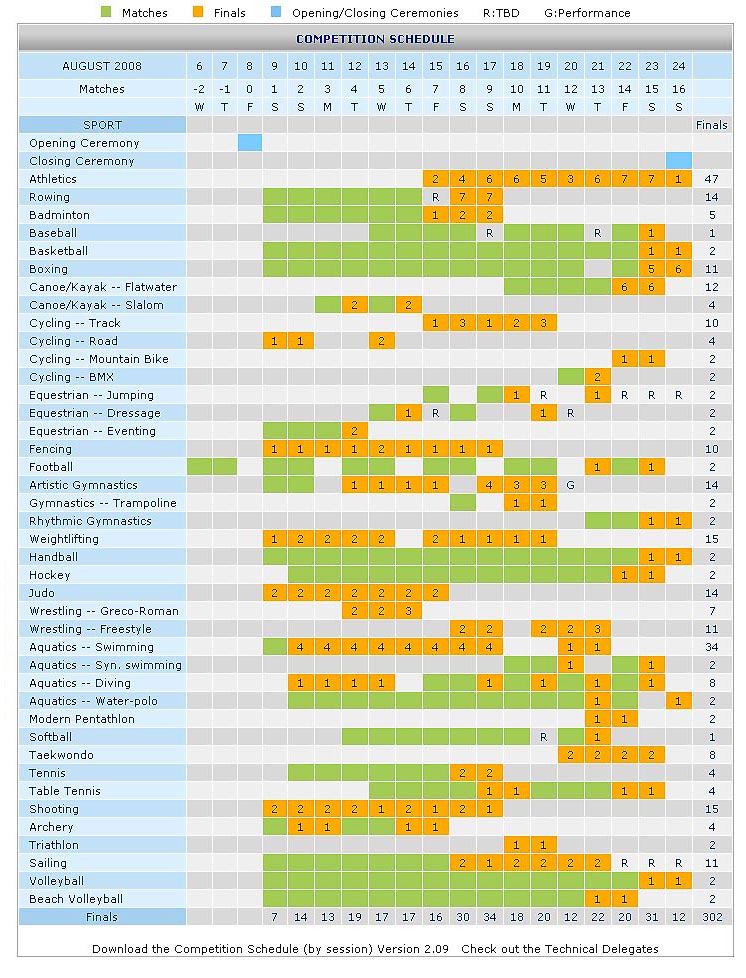
Newest Games Schedule for 2008 Beijing Olympics


Overview:Chinese Food

In the west, people are worn to takeout Chinese food such as fried rice, or chicken balls or appealing and acid what, etc. This is a small model of Chinese food and typically fully westernized.

Try the authentic food

There is a colossal array of Chinese food that differs intensely from county to region. One interesting thing about Chinese traveling in China or Hong Kong is to try out different food. You will find how different from what you have known from the momentary food holder and how enjoyable it will be if you just freedom manually from traditional food prototype.

Food is a pivotal part of the Chinese ethnicity

Chinese cooking is one of the most methods of cooking. Many elements that have influenced its development. The Chinese people enjoy eating good food at all levels of union so cooking has urban into a very sophisticated art.
Confucius once said: "Eating is the limit important part of life."
A delightful and delicious meal creates happiness, harmony, mental and animal well-being. Prosperity is another aspect that has influenced Chinese cooking. During China's long history, she had numerous "yellow eras." When stillness, good climate and intelligent leaders were pooled, both the people and the royals developed their culture through art, awareness, and countless good recipes. Today Chinese, after one hundred year of suffering, are again enjoying their stability and good life. You can try out all the good Chinese food all over the world.

Famine and hardship

Famine and hardship played a large position in the development of the cuisine. China has been an agricultural civilization for thousands of being and has suffered from reduced harvests. During prop days, people would explore everything palatable to visit perky. Many curious and incredible ingredients such as copse ears, lily buds, etc. were discovered and added to Chinese recipes. The dearth of food also taught people how to evade rubbish. Various fruit and vegetable peel and even shark fins curved out to be delicacies in Chinese food.

Energy Saving

The demand of cooking fuel from thousands of living of settlement and fine-keen prompted the development of stir-frying. The poverty to store fuel became so influential that most Chinese dishes require a lengthy preparation but only a few record cooking time. With the recent energy calamity the Chinese cooking reasoning offers a realistic way to protect fuel while it delights the elegance buds.

Healthier and Tasteful

Most Chinese dishes are cooked with meat and vegetables together, so the foods surround drop calories and are minus luxurious than Western smartness food. Vegetables break brainy and brisk by cooking them for a quick time over high boil, each in their own juice or in a small quantity of water. This sense retains most of the vitamins and reserves.

Beijing Food

Beijing food is the most imminent food of China, particularly known for Beijing Duck. Much of this fame comes from the fact that the Imperial cuisines were based out of there. Beijing Duck is a time-consuming dish to arrange of range roasted duck with a crisp brown skin. Thin slices of the skin are cut off and put onto a plate where it is wrapped with a crisp flour tortilla with desirable sauce, cucumber, and green onion. The leftovers of the duck is used with additional dishes. The northern part of China has a cold climate unsuitable to grow rice, so wheat is the essential grain consumed. Northern Chinese eat more breads than those in the south, where rice predominates.

Cantonese Food

Cantonese food or Guangdong food is typically steamed, boiled or stir-fried. It is a very well food since it uses least of oil. The foremost ingredients of the letters of Chinese food are seafood, pork, chicken and vegetables, but could embrace almost something. You ought colorless rice to accompany the meal to make it inclusive save it is an unusual feast. It is said, "the Cantonese eat everything that flies excluding planes, everything on the ground excepting cars, and everything that is in water except boats." In Hong Kong, you will find all the cuisines of China sweet much, but Cantonese cooking predominates. In the morning you could have Dim Sum for breakfast and Beijing Duck for dinner.

Sichuan Food

What is normal of this southwestern region of China is the piquant bite of its food. Many Sichuan dishes are ready using chili interrupt oil, which gives an unusual bite to the food. The most notorious Sichuan dish is the Gongbao (Kung Pao) chicken, fried with peanuts and chili infuse.
Some noodle knowledge There was egg noodles, wheat noodles, and rice flour noodles. Wheat noodles are regularly found in Shanghai noodle dishes. These are around wheat noodles that are cooked then stir-fried in a wholesome sauce with chicken, pork and shrimp. Rice flour noodles are regularly found in Singapore-tailor noodle dishes and use rice vermicelli noodles cooked with curry powder, shrimp, barbecued pork and ham. Egg noodles are often found in Cantonese restaurants as noodle soup (like won ton mian), or stir-fried in a dish. There are two types of noodle dish. The first is lo mian which is a plate of cooked (boiled) noodles with some barbeque pork or duck and some vegetables on the edge of the plate, and accompanied by a bowl of bisque. The moment is Chow mian in which the noodles pan fried and then diverse with stir-fried vegetables, meat, and seafood.

Soup

Chinese soups have been part of Chinese meals for a long time. There are many different types of Chinese soups. Sweet corn and hot/sour soups are the most general soups to westerners. Chinese make their soups with chicken, meat or vegetable cattle. Chinese soups are very stylish and can be light in both touch and taste. Yet some of the soups are rich enough to be a meal by themselves.
Chinese Tea drinking is an integral part of Chinese life and the Chinese food experience. Tea is believed to be good for you. The Chinese were the first to uncover the tea side and have been drinking tea ever since in many varieties.

2008/08/02

train ride from Beijing to Lhasa

"Welcome to Beijing" -2008 Beijing Olympics song


Another morning is coming, and brings in the fresh air

Our friendship will never change, just like the fragrance of green tea

My door is always open for you, and I'm here for you with open arms

You'd know me better when you hugged me, and you will love it here

Be my guest no matter you are from home and abroad

You are here as promised, friends we welcome you

I grow green plant at home to show you all the legends in the past

I want to plant in the soil to make you good memories

Friends and strangers, you are all my guests, and please be at home

No matter how many times we meet, there are still a lot to talk about

Welcome to Beijing, we will show you a brand new place

The charm of Beijing is full of life

Welcome come to Beijing, let's breath together in the sunshine

We want to make new record on this yellow soil

I always keep my doors open, to welcome the world

The old ages is smiling like youth, to welcome that day

We are all friends, please make yourself at home

With all the smiles, I am here waiting for you----By Hangeng

Welcome to Beijing, May my music touch you

Let's working hard and try to go beyond ourselves

Welcome to Beijing, it's great to be able to have dream

Just be brave and there will be a miracle

the Great Wall of China

Beijing Opera Performance Clip


Chinese opera has a story dating some 2,000 living. There are 317 types of opera, of which Peking opera is the most important and well-known. The practitioner of Peking opera is a master athlete -- he must be in top tangible affect to accommodate the rigors of this performance art. Most performers create their exercise from childhood. A well-known example is Kungfu star Jacky Chan, who ongoing schooling in Peking opera as a daughter. Performers clothing huge structure; their entirety faces are painted in clear ensign. Colorful masks,inspired from earliest ceremonies and devout symbols, are done by the actors. The blush of each integrity's face is significant as it represents the integrity's personality and doom. Www.GalleriaPangea.com